Let’s be real: advertising healthcare on Google in 2026 isn’t for the timid. If you’ve ever dipped your toes into Google Ads for a health-related brand—be it a clinic, a telehealth service, a wellness app, or a supplement company—you know exactly what I’m talking about. You set up your campaign, upload your creative assets, hit that publish button… and then, bam! The dreaded email hits your inbox. Ad disapproved. Policy violation. Account suspended.
It’s beyond frustrating. And honestly, a lot of the time, it’s not even your fault. The world of Google’s healthcare advertising is genuinely intricate, and the guidelines often feel like they’re written in a foreign language.
But here’s the silver lining: health brands that really get the system don’t just scrape by on Google Ads—they thrive. Most of their competitors have either thrown in the towel or are just going about it all wrong.
This guide is here to turn things around for you.
We’re going to dive deep into how Google’s healthcare ad policies work in 2026, what’s changed recently, how to collaborate with certified healthcare advertising vendors, and—most importantly—how your health brand can advertise safely, compliantly, and profitably.
Let’s jump right in!
Why is healthcare advertising such a puzzle?
Well, Google isn’t just being difficult for the sake of it. The rules surrounding health and medical advertising are there for good reasons, and getting a grip on them can help you navigate the system more effectively.
Healthcare falls into what Google calls a "sensitive category." According to their personalized advertising policy, advertisers can’t target users based on their personal health issues, disabilities, or medical history. So, if someone searches for "type 2 diabetes symptoms," you can’t (and really shouldn’t) follow up with ads that say, "We know you have diabetes — check out our medication."
That approach is not only creepy but also potentially harmful. Google gets it, and so does your audience.
On top of that, the content of health ads is examined much more closely than, say, an ad for a furniture store or a software company. A misleading claim in a mattress ad might be annoying, but a false statement in a pharmaceutical or medical device ad could actually jeopardize someone’s health. Google takes that responsibility very seriously — and you should too.
The outcome is a policy framework that’s complex, sometimes contradictory, and always changing. But once you understand how it all fits together, it starts to make sense.
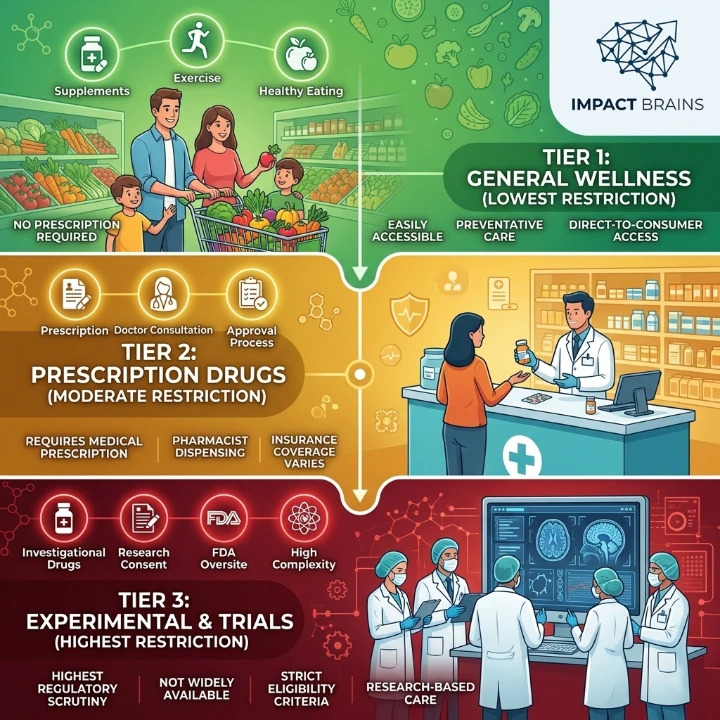
What's New: Google Ads Health Policy News in 2026
The landscape of Google Ads health policies has seen some significant changes over the past 18 months. Here’s a rundown of what’s new and what you should be aware of right now.
1. Stricter Rules for Mental Health Advertising
One of the most notable changes has been in the realm of mental health services. In response to growing concerns about misleading advertising practices in this sector—especially regarding apps aimed at teens and crisis intervention services—Google has implemented tougher verification requirements for mental health advertisers.
If you’re promoting therapy services, mental wellness apps, or behavioral health platforms, be prepared for an extra verification step to ensure that your service is either provided by or overseen by licensed mental health professionals.
This is actually a positive development—it creates a competitive edge for legitimate providers. If you’re on the up-and-up, you’ll breeze through. If you’ve been cutting corners, now’s the time to get your credentials sorted out.
2. Scrutiny on AI-Generated Health Content
With the surge of AI-generated content flooding the internet, Google has quietly adjusted its Quality Score algorithm to penalize health-related landing pages that come off as thin, generic, or unverified. This ties directly into Google’s broader E-E-A-T (Experience, Expertise, Authoritativeness, Trustworthiness) guidelines, but it’s being enforced more rigorously in the healthcare sector.
What this means for you: your landing pages need to demonstrate genuine expertise. This includes having author bylines with credentials, references to medical sources, and content that has been clearly reviewed by a licensed professional.
3. Stricter Regulations on Addiction Treatment Advertising
Addiction treatment advertising has been a contentious issue for years. In 2026, Google has broadened the list of addiction-related keywords that require certified vendor status for advertising. If you run a recovery center or a substance use treatment facility, this is a must-follow guideline — you must go through Google's verified partner pathway.
4. New Personalized Advertising Policy Enforcement for Health Sensitive Categories
Google is making some significant changes to how it enforces its personalized advertising policy, especially when it comes to sensitive health categories. Advertisers can no longer rely on Customer Match lists, remarketing audiences, or similar tools to target users based on their health conditions, even if that wasn’t their original plan.
So, what does this mean for you? If someone has visited your "diabetes management" page and you’re trying to retarget them with display ads that mention diabetes, you could be stepping into risky territory compared to two years ago. It’s essential to make your retargeting strategy more general, or you might want to collaborate with a certified partner who understands how to create compliant audience funnels.

Healthcare Advertising Vendors for Google Ads: Why Certification Matters
This is the part that many agencies and marketing teams overlook — and it’s the one that can lead to serious issues.
Google has a certified partner ecosystem tailored for healthcare advertisers. These are agencies and tech vendors that have been thoroughly vetted and approved by Google to manage campaigns in sensitive healthcare categories — particularly addiction treatment and pharmaceutical advertising.
If you find yourself in one of those restricted categories and attempt to run Google Ads without going through a certified channel, you’re not just facing the possibility of ad disapprovals. You’re putting your entire account at risk of suspension.
What Makes a Healthcare Advertising Vendor "Certified" for Google Ads?
Certified healthcare advertising vendors for Google Ads have successfully navigated Google’s formal verification process. This usually involves:
Proof of industry legitimacy — the vendor must show that they work with licensed, verified healthcare providers.
Compliance infrastructure — the vendor has established internal processes to review ad content, targeting, and landing pages in line with healthcare advertising standards.
Agreement to Google's healthcare-specific advertising terms — which are more stringent than the standard Google Ads terms of service. Ongoing audit obligations — certified partners can have their status reassessed and potentially revoked.
For addiction treatment in particular, Google’s LegitScript certification is essentially a must-have. LegitScript is a third-party verification service that Google collaborates with to vet treatment centers before they’re allowed to advertise.
How to Choose the Right Healthcare Advertising Vendor
Not every Google Partner agency is a certified healthcare advertising vendor. Here’s how to sift through your options:
Start by asking about their experience in the healthcare sector. A reputable agency should be able to share details about specific healthcare campaigns they’ve handled and the compliance standards they adhere to.
Check if they’re familiar with LegitScript, especially if you’re in addiction treatment or pharmacy. If they don’t know what LegitScript is, that’s a major red flag.
Make sure they’re aware of HIPAA regulations in their processes. Your agency should recognize that elements like landing page forms, call tracking, and remarketing pixels all come with HIPAA responsibilities.
Insist on a compliance review process. Before any healthcare ad goes live, your vendor should have an internal review step in place — not just rely on Google’s automated checks.
Our agency specializes in compliant healthcare marketing — from Google Ads strategy to landing page design.
We've helped health brands advertise with confidence without the constant fear of policy violations.
See how we can do the same for you
Get your free healthcare marketing audit.
The Most Common Google Ads Mistakes Health Brands Make (And How to Fix Them)
Let’s dive into some real talk. After collaborating with various health brands, we’ve noticed a few common pitfalls that keep popping up.
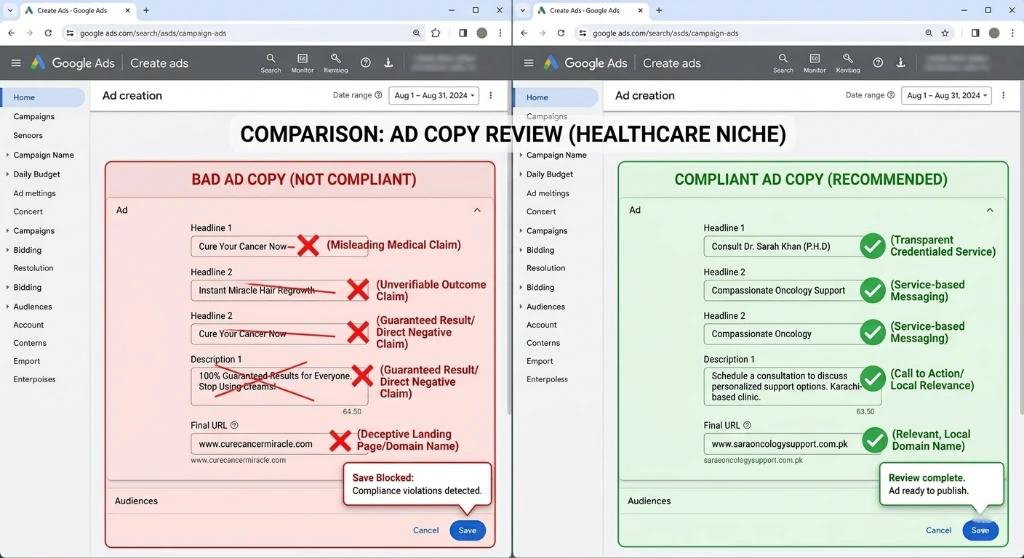
Mistake #1: Overclaiming in Ad Copy
This is the top reason why healthcare ads get rejected. Using phrases like "guaranteed results," "cure," "eliminate [condition]," or "proven to treat" is a surefire way to run afoul of the rules. Google's automated policy checker is quick to flag these, and even if one manages to sneak through, a manual review will catch it.
The solution? Change your wording from outcomes to methods. Instead of saying "We cure chronic pain," consider "Personalized chronic pain management — take the first step." It’s still engaging, it follows the rules, and honestly, it’s just better marketing.
Mistake #2: Using Remarketing Audiences in Sensitive Health Contexts
Creating a remarketing list from visitors to a page titled "/HIV-treatment-options" and then targeting them with display ads is a clear violation of Google's personalized advertising policy for sensitive health categories—no exceptions.
The fix? Opt for condition-agnostic remarketing (like all site visitors or those who land on your homepage) instead of segmenting by health condition. If you need campaigns focused on specific conditions, run them as acquisition campaigns (search, Performance Max) rather than remarketing.
Mistake #3: Thin or Unverified Landing Pages
Google doesn’t just look at your ad; it checks where that ad leads. A landing page that features a stock photo, a few bullet points, and a phone number won’t pass muster in the healthcare sector.
The fix? Put as much effort into your landing pages as you do into your ads. Include professional credentials, authentic reviews (sourced compliantly), clear privacy policies, and content that showcases real expertise. Think of your landing page as part of your compliance strategy, not just a tool for conversions.
Mistake #4: Not Having a HIPAA-Compliant Infrastructure
This might not seem like a Google Ads policy issue at first glance, but trust me, it can come back to haunt you. If your lead capture forms, call tracking system, or CRM aren’t HIPAA compliant, you’re opening yourself up to some serious liability that could bring your entire marketing operation to a halt, not just a single campaign.
The solution? Partner up with a healthcare marketing agency that has a solid HIPAA-compliant tech infrastructure right from the get-go. This means utilizing HIPAA-compliant form tools, call tracking platforms that come with Business Associate Agreements (BAAs), and a CRM that properly manages protected health information.
Mistake #5: Ignoring Geographic Compliance
When it comes to healthcare advertising, the rules go beyond just what Google says — they also involve state, federal, and even international laws. If an addiction treatment center is promoting its services across all 50 states, it must navigate a maze of different telehealth regulations, state licensing requirements, and disclosure obligations.
The solution: Integrate geo-targeting into your compliance strategy, not just your marketing approach. Be aware of where you’re legally allowed to provide services and tailor your targeting accordingly.
A Practical Compliance Checklist Before You Launch Any Healthcare Campaign
Before you hit that publish button on your next healthcare Google Ads campaign, make sure to check off this list:
Ad Copy Review
- Avoid making any guaranteed outcomes or cure claims
- Steer clear of fear-based or alarmist language
- Ensure condition-specific language is reviewed against Google's sensitive categories list
- Be ready to back up all claims with solid evidence if audited
Targeting Review
- Don’t use remarketing lists that are segmented by health condition
- Make sure Customer Match lists aren’t built from health-condition-related data sources
- Ensure your geo-targeting aligns with your licensed service area
Landing Page Review
- Clearly display author/provider credentials
- Have a privacy policy that’s current and easy to find
- Avoid thin content — aim for at least 600 words of substantial, expert information
- Ensure the mobile experience is smooth and quick (Core Web Vitals should be passing)
- Implement HIPAA-compliant forms and call tracking
Account-Level Review
- If you’re in a restricted category (like addiction treatment or pharma), make sure your LegitScript certification is active
- Work with a certified healthcare advertising vendor if necessary
- Complete billing and business verification in Google Ads
Want us to run this checklist on your existing campaigns for free?
We've helped health brands advertise with confidence without the constant fear of policy violations.
No strings attached.
Claim your free campaign audit.
What Compliant Healthcare Advertising Actually Looks Like
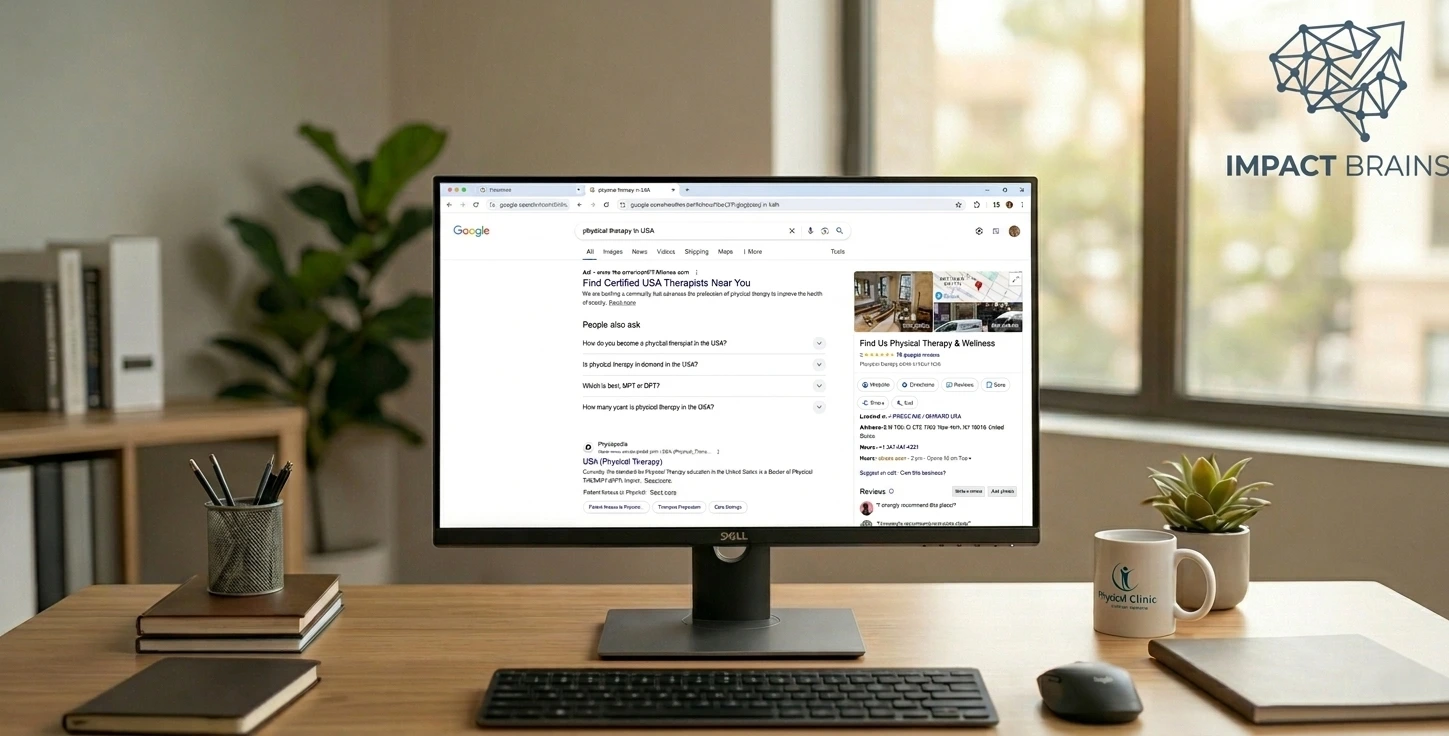
Let’s break it down with a real-world example. Imagine a physical therapy clinic aiming to run a compliant Google Ads campaign in 2026.
Campaign Goal: Attract new patients for physical therapy services.
Campaign Type: Search (using both brand and non-brand keywords)
Keywords: "physical therapist near me," "back pain physical therapy [city]," "sports injury recovery clinic"
Ad Copy Example:
Headline 1: Specialists in Back Pain & Sports Injuries
Headline 2: Licensed PTs — Appointments Available This Week
Headline 3: Most Major Insurance Accepted Description: Our licensed physical therapists design personalized recovery plans. We focus on board-certified, patient-centered care. Schedule your evaluation today.
Why this works: There are no promises of guaranteed outcomes or medical claims. The ad highlights credentials (licensed, board-certified) and emphasizes benefits while staying relevant to the local community. It checks all the boxes.
Landing Page: The ad directs to a dedicated landing page featuring:
- The clinic’s licensed therapists, complete with names, photos, and credentials
- A concise overview of the conditions treated (using careful language)
- Authentic patient testimonials, shared with proper consent and compliance
- A HIPAA-compliant booking form
- A clear link to the privacy policy
This isn’t rocket science. Yet, many healthcare brands miss the mark — which is why those that get it right consistently see better results.
The Opportunity Inside the Restriction
Let me share a fresh perspective with you.
Sure, navigating healthcare advertising on Google has become more challenging. There are definitely more rules, more hurdles, and a ton of compliance checkpoints compared to nearly any other industry out there.
But guess what? That friction is actually your chance to shine.
Every health brand that throws in the towel after a policy rejection is one less competitor in the ring. Each practice that runs chaotic, non-compliant ads and ends up getting suspended opens up a space in the market just waiting for you to step in. And every healthcare marketer who can't tell the difference between a sensitive category restriction and a complete ban is leaving valuable clicks — and potential patients — on the table.
The brands that will thrive on Google Ads in the healthcare sector by 2026 won’t necessarily be the ones with the deepest pockets. They’ll be the ones who truly grasp the rules and have the right team backing them up. That’s where the real competitive edge lies.
Ready to Advertise Your Health Brand on Google — Without the Guesswork?
We’re a marketing and web design agency that focuses solely on health and healthcare brands. We know the ins and outs of the policy framework, the compliance requirements, the certified vendor landscape, and — most importantly — how to create campaigns that actually convert.
Whether you’re a solo practice eager to launch your first compliant campaign or a multi-location health system aiming to scale your digital advertising safely, we’ve been there and we can help you too.